


Pikkit: Sports Betting Tracker
Pikkit, Inc
I found Pikkit most useful when I treated it as a shared conversation around sports betting rather than as a replacement for every betting service I already use. The app sits in the sports category and focuses on tracking action, following friends, and taking part in a betting community. That combination makes it feel different from a simple notes app or a private spreadsheet, because the social layer is part of the reason to return.
My household test was straightforward: one person could use it to keep an eye on personal betting activity while another used the social side to discuss picks and results. That sounds simple, but it exposes an important boundary. A shared phone or tablet does not automatically mean a shared betting account. I would keep each person’s login, financial activity, and personal decisions separate, even if the device is used in the same room.
That distinction matters because Pikkit is free to download, yet it includes in-app purchases ranging from around a dollar to nearly two hundred dollars per item. I would not hand the device to a child or let another household member make purchases casually. The app can be part of a shared sports routine, but the account itself should remain personal and handled by an adult who understands what betting-related activity involves.
How Pikkit Fits Into a Real Sports-Betting Routine
More useful as a record and social hub than as a betting replacement
When I opened the app, the most appealing idea was having a place to organize my action instead of relying on scattered screenshots, memory, or a notes file. A bet can be easy to forget after a busy day, especially when several games overlap. A tracker gives the activity a timeline and makes it easier to look back at what I actually did rather than what I remember doing.
The social angle changes the experience. Sharing bets with friends can make a group conversation more organized, while following other users gives the app a community feel that a private spreadsheet cannot provide. I like that distinction: a spreadsheet is usually better for complete personal control, but Pikkit is more engaging when the point is to compare ideas, discuss action, and keep sports conversations in one place.
Related News

Why WhatsApp Messenger Still Makes Everyday Communication Feel Easy

Jurassic World: The Game Is the Better Dino Tycoon for Strategic Players

Threads in Real Life: Who Should Join, Lurk, or Leave

How SHEIN Turned Shopping Into an Endless Content Feed

How to Make Fortnite Feel Smarter on Mobile

Should You Switch to Microsoft Outlook on Mobile?
I would still avoid treating a shared pick as a recommendation that deserves automatic trust. The app’s community focus can make opinions feel more convincing simply because other people are involved. My practical rule is to use the social feed for ideas and discussion, then make my own decision after checking the event, the odds, and my available budget elsewhere when necessary.
A realistic evening with the app
Imagine a Saturday with several games starting at different times. I might open Pikkit before the first game, record the wagers I intend to follow, and then check the app later when friends have posted their own action. During the evening, the value is not just seeing another pick; it is having a running record that helps separate planned bets from impulsive additions.
That workflow is especially helpful when a friend asks, “What did you take tonight?” Instead of searching through messages, I can use the tracker as the reference point. After the games, reviewing the entries can show whether I was consistent with my own approach or simply reacted to every new result. That kind of reflection is one of the strongest reasons to use a tracking app at all.
Gallery
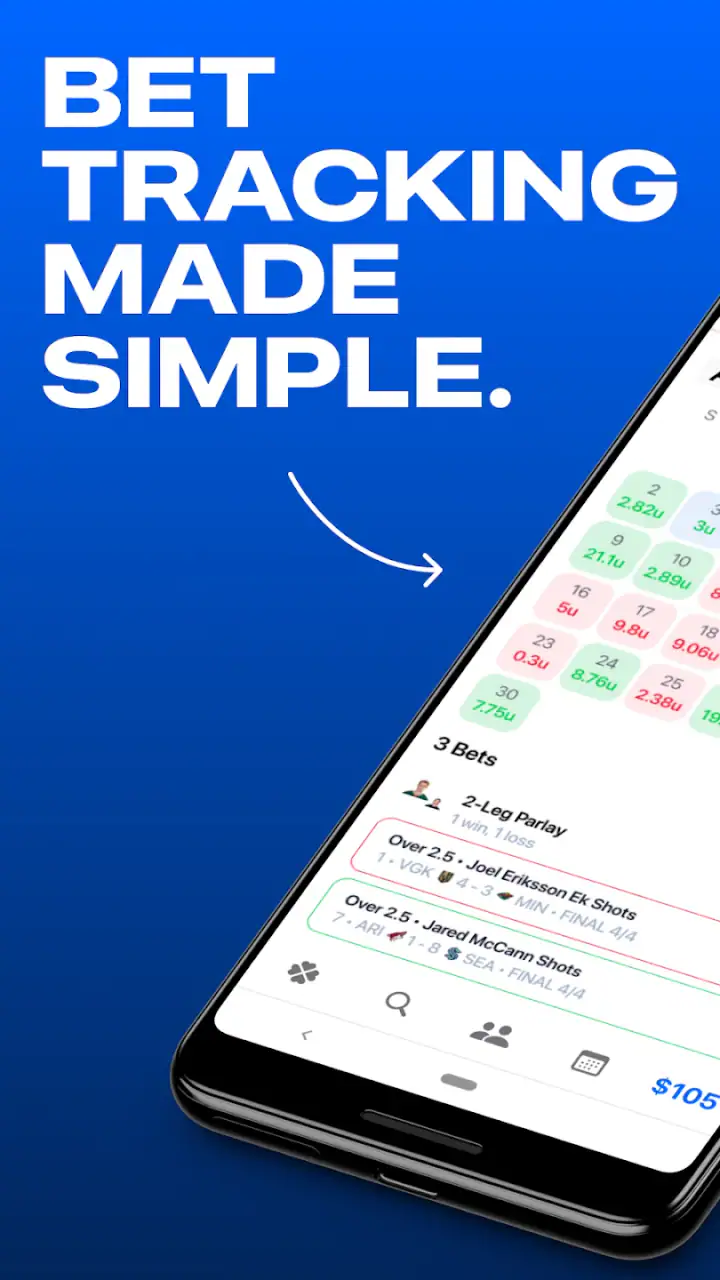
The trade-off is that tracking only works when I enter information carefully and consistently. If I skip entries, forget what a selection represented, or use the app only when results are exciting, the record becomes less useful. Pikkit can make activity easier to review, but it cannot create discipline by itself.
What makes it different from the usual alternatives
The usual alternatives each solve only part of the problem. A sportsbook is where a wager may be placed, but it is not necessarily the best place for a neutral overview of all activity. A phone notes app is quick, but it does not offer the same community context. A spreadsheet can be more flexible for detailed calculations, but it takes more effort to maintain and lacks the immediacy of a social sports app.
Pikkit sits between those options. It is less private and customizable than a spreadsheet, yet more purposeful than a casual note. It is also more community-oriented than a basic history screen inside a betting service. I would choose it for a person who wants a convenient record plus interaction with friends, not for someone who wants to build a fully customized financial model of every wager.
One non-obvious advantage is the separation between conversation and memory. Friends may discuss a pick in a group chat, but chat messages quickly become difficult to search. A dedicated tracker can preserve the betting context in a way that a fast-moving conversation often cannot. The weakness is that social visibility may encourage comparison, so I would not use other people’s activity as a target for my own spending.
Setting up sensible boundaries on a shared device
For household use, I would begin by deciding who owns the account before anyone installs the app. If two adults want to use Pikkit, I would keep separate accounts rather than sharing one profile. That prevents one person’s tracking history from becoming mixed with another person’s decisions and makes later review much clearer.
I would also avoid leaving the account open on a communal tablet. Even without discussing specific device settings, the basic principle is easy: sign out or switch users when the device changes hands, and do not assume that a familiar household member should see every personal entry. A shared screen is convenient for discussing sports, but convenience should not erase account boundaries.
Notifications deserve the same care. A message or activity alert appearing on a lock screen can reveal more than intended. I would review the phone’s notification behavior before using the app around children, guests, or roommates. This is not a reason to reject Pikkit; it is a reminder that social sports activity can be personal even when the device is shared.
Another useful habit is agreeing on a simple household rule: discussion can be shared, but purchases and betting decisions are individual. That keeps a family sports night from turning into accidental account use. It also makes it easier to explain to younger household members that the app is for adults making responsible choices, not a game to copy.
Coordination without confusing ownership
Pikkit works best in a group when everyone understands what is being shared. A friend posting a bet may be inviting discussion, recording a personal position, or simply joining the community conversation. I would not assume that a shared post means someone else is managing my activity or that I am expected to match it.
For a household or small group, I would use the app as a coordination point before and after games. Before the event, people can compare opinions. During the event, the tracker can help each person remember their own positions. Afterward, everyone can review outcomes without reconstructing the night from separate messages. The key is to keep each person’s record distinct.
This approach also reduces a common problem: one enthusiastic person becoming the unofficial betting manager for everyone else. That may seem efficient, but it blurs responsibility. I prefer each adult to enter and review their own activity, even if the group talks about the same games. Pikkit is more useful when it supports coordination rather than replacing personal judgment.
A practical tip is to review the app before a busy sports day and decide what you actually want to track. If the goal is learning from personal habits, record every relevant action consistently. If the goal is simply sharing a few picks with friends, do not create a complicated routine that you will abandon after a week. The best setup is the one you can maintain honestly.
Age, trust, and the social side
The listed content rating is Everyone 10+, but I would not interpret that as a blanket recommendation for children to participate in betting activity. The subject matter and the presence of purchases make adult supervision and household judgment important. A younger person might encounter sports discussion without understanding the financial consequences attached to betting decisions.
For adults, trust still matters. I would be comfortable sharing sports opinions with friends through the community side, but I would keep payment details, account access, and personal spending private. I would also be cautious about accepting confident claims from unfamiliar users. A community can be useful for discovering perspectives, yet popularity is not the same as accuracy or suitability.
This is where Pikkit may not be the right choice for everyone. If you want a completely private log, a local notes system or spreadsheet may feel safer. If you are trying to avoid social pressure around betting, the community element could be distracting rather than helpful. And if you are looking for a full financial-management tool, the sports-focused design may not match that goal.
On the other hand, someone who already follows sports closely and wants a cleaner way to remember wagers may find the app easier to return to than a spreadsheet. The community can also make tracking feel less like bookkeeping. I would recommend it to an adult who understands that the social feed is a source of conversation, not a substitute for independent decisions.
Performance, maturity, and what to expect
Pikkit was released on May 19, 2022, and the current version is 0.0.9377. It supports devices running Android 7.0 or later. Those details make it accessible to people using older Android hardware, although the experience can still depend on the phone’s age, storage, and general performance.
The app has built a visible audience, with more than one hundred thousand installs and an average rating of 4.7 from around two thousand six hundred ratings. I view that as encouraging evidence that the concept resonates with many users, but I would not treat the rating as proof that every household or betting style will fit the app equally well.
It is developed by Pikkit, Inc, and the free entry point makes trying the basic experience relatively easy. The purchase range means I would pay attention during setup and would not assume that every useful part of the service is included without cost. Before committing to any paid option, I would first use the free experience long enough to decide whether I actually maintain the tracking habit.
One detail I appreciate is that the app’s value can be tested through behavior rather than promises. After a few sports sessions, I can ask whether I am entering activity consistently, returning to review it, and finding the community useful. If the answer is no, no amount of social activity will make it the right tool for me.
Small habits that improve the experience
My first recommendation is to enter activity as close to the decision as possible. Waiting until the end of the night makes it easier to forget details or combine separate actions. A quick entry immediately after making a decision creates a more trustworthy personal record.
Second, I would review the tracker at a fixed moment rather than checking it constantly. A short review before games and another after the day ends is more useful to me than opening the app every few minutes. It keeps the focus on learning from activity instead of turning the app into another source of live-event anxiety.
Third, I would separate social discovery from personal commitment. I can read what friends are discussing, save the ideas that interest me, and still decline to follow them. That small pause is important because the community design can make a decision feel urgent when it does not need to be.
Finally, I would use the app to notice patterns, not to chase losses. If a review shows that I am adding bets after disappointing results or increasing activity because friends are active, that is a reason to step back. The tracker is most valuable when it helps me recognize those habits early.
My household verdict
After looking at Pikkit through a shared-device lens, I see it as a focused sports companion for adults who want tracking and community in the same place. It is more engaging than a plain log and more socially useful than a private spreadsheet. The best use is coordinated discussion with clearly separate accounts, not a single household profile that everyone casually operates.
I would recommend it to a sports fan who wants to remember personal action, compare ideas with friends, and review decisions after the games. I would skip it if privacy, complete customization, or avoiding betting-related social pressure is the priority. In those cases, a private notes system, spreadsheet, or a more narrowly focused alternative may be a better fit.
The free price makes experimentation reasonable, but I would keep the in-app purchase range in mind and establish spending boundaries before using it on a shared device. The Everyone 10+ label also deserves adult interpretation rather than being treated as permission for unsupervised betting activity.
Overall, I think Pikkit succeeds when I use it as a record-keeping and conversation tool, not as an authority. Its real strength is turning scattered sports-betting activity into something easier to review with trusted friends while leaving the final decision with me. That balance makes it worth trying for the right adult user, provided the account, age, privacy, and spending boundaries are clear from the beginning.
FAQs for Pikkit: Sports Betting Tracker
What is Pikkit: Sports Betting Tracker used for?
Pikkit is designed to help sports bettors organize, monitor, and review their betting activity in one place. It can be used to track wagers, view performance history, follow betting results, and analyze trends over time. The app is primarily a management and analytics tool, so users should not expect it to place bets or guarantee profitable outcomes.
Does Pikkit place sports bets directly from the app?
Pikkit should generally be viewed as a sports betting tracker rather than a sportsbook. Its main purpose is recording and analyzing wagers, while the actual bet is normally placed through a supported sportsbook or betting platform. Availability and integration features may vary by location, device, and provider, so users should check the current app description and local regulations before downloading.
Is Pikkit: Sports Betting Tracker free to download?
The app may be available to download without an upfront charge, but some features, integrations, or advanced statistics could depend on the current subscription model or in-app purchases. Pricing can change over time and may differ between Android and iOS. Before signing up, review the store listing carefully to understand which tools are included for free and which require payment.
What sports and betting information can be tracked in Pikkit?
Pikkit is intended for tracking sports wagers and related performance details, such as selections, odds, results, bet types, and historical records. The exact sports, markets, supported sportsbooks, and automatic-import options can vary by region and app version. If you use a less common sport or betting provider, confirm compatibility first, since some entries may need to be added manually.
Is Pikkit suitable for responsible sports betting?
Pikkit can be useful for responsible betting because keeping an accurate record may help users understand spending, wins, losses, and long-term behavior. However, tracking tools do not remove the financial risks of gambling or improve the certainty of a prediction. Set a budget, avoid chasing losses, follow local age requirements, and stop using betting services if your activity becomes difficult to control.
Pros
- Tracks bets from multiple sportsbooks in one place.
- Clear performance charts make wins and losses easy to review.
- Supports custom tags for organizing bets by sport or strategy.
- Helpful reminders can reduce missed bet-settlement updates.
- Useful for identifying long-term betting habits and patterns.
Cons
- Some features may require a paid subscription.
- Manual bet entry can become tedious for frequent wagers.
- Tracking accuracy depends on keeping odds and results updated.
- Limited value for users who only place occasional bets.
- Sportsbook integrations may vary by region or provider.


